Blog
28 posts · 9 instagram posts
BLOG POSTS

Leveraging Authority for Design Success
Have you ever wondered how subtle cues shape our decisions? Or how a simple change in appearance can alter perceptions? This is the 5th post reflecting on Robert Cialdini's seminal work, "Influence." The book explains how our minds work when making choices. I have read and reflected on it so that you get tips on how to use these concepts in design and work settings. Here, I combine three ideas from Cialdini's book with my own experiences. I show how these ideas affect communication, how we see things, and influence in work environments.

Likability Matters: Keys to Success in the Workplace
In the professional world, how you dress and communicate can make or break your success. Research shows that even subtle cues like clothing choices can sway people's trust and cooperation. But it doesn't stop there. How you handle disagreements and deliver tough news also shapes how others perceive you and your impact.So, let's dive into the nitty-gritty of professional dynamics. We'll explore how your outfit can be your silent ally in winning trust. We'll also learn how to change conflicts into teamwork and share difficult messages smoothly.Get ready for some real talk about the power of perception in the workplace. Learning about smart dressing and handling hard talks will improve your work skills. So, buckle up and let's dive in!

10 Heuristics for Effective Business Communication
Have you thought about how the rules for creating easy-to-use interfaces could change our everyday conversations? Why is it important for designers to think about blending these areas? In a time when clear communication is key, knowing how design rules and good conversation mix can really improve our talks. This isn't just to make chatting easier. It's to make it more useful, interesting, and meaningful.In this article, I combine Ros Atkins' Art of Explanation methods with Jakob Nielsen's 10 heuristics. By doing this, I'm hoping to help designers improve their business conversations. Nielsen's rules changed how we see user-friendly interfaces, hoping to make tech easy for all. Atkins focuses on keeping communication simple, exact, and relevant. This matches Nielsen's ideas. They provide a base for new rules to help anyone improve their communication skills.

The Influence of Social Proof in Professional Settings
Ever wondered how the concept of "going with the flow" impacts your work or how your team comes up with ideas? Well, let's dive into the world of social proof and see how it's playing a bigger role than you might think, especially in design and innovation. Imagine you're in a room where everyone's nodding along to the same old ideas because, hey, if it ain't broke, don't fix it, right? Wrong. This mindset can really put a damper on creativity and new ideas. In my journey, I've learned that it's important to take initiative. Even if it seems unconventional. Whether it's introducing new features or promoting bold ideas, we need to challenge status quo. So, are you willing to understand social proof to your advantage? Are you willing to break free from BAU, and genuinely prioritise user-centred design? Let's get into how we can turn the tide, encourage fresh thinking, and maybe even lead the charge in redefining norms.
Things I Wish I Knew 20 Years Ago While Job Hunting in UX Design
This post is about three key learning moments that came after a tough job interview and changed my view of good communication. The candid feedback from a recruiter. A mentorship session on ADPList. And insights from Ros Atkins' "The Art of Explanation". These experiences revealed the critical importance of structured narrative in interviews. This epiphany has transformed my approach to interviews, emphasising the power of clear, structured responses to convey my design journey and impact. I share these learnings to empower fellow UX designers. I want to help them master their stories. They should be able to speak about their experiences and skills with clarity and conviction. This is true even in high-pressure situations.

What I Learned Reading Robert Cialdini's Influence (Part 2)
Are you navigating the intricate world of product design or user experience, wrestling not just with the challenges of creating impactful designs but also with the complexities of influencing decision-making within your organization? Whether you're a seasoned leader with years under your belt or a junior designer eager to carve out your path and make a significant impact, the journey is fraught with hurdles that extend beyond the design itself.This post is tailored for those who find themselves at the crossroads of design and organizational dynamics, looking to wield influence effectively. If you've ever found yourself pondering how to advocate for user-centric design principles amidst a sea of differing opinions, or how to navigate the murky waters of corporate politics to push forward your design ideas, then you're in the right place. We delve into not just the 'what' but the 'how' of making your voice heard and your work recognized, turning principles into practice for the betterment of your projects and your professional growth.

What I Learned Reading Robert Cialdini's Influence (Part 1)
As product designers, how often do we pause to think about the forces that shape our interactions, decisions, and, ultimately, our success? Have you ever considered the profound impact that your behaviours have on your work with stakeholders? Or have you pondered the role that personal rapport has in transforming challenges into collaboration? As product designers, we do our best with stakeholder relationships. We seek ways to increase our impact, build meaningful collaborations, and push the user-centric agenda. To do so, it's crucial to dig deeper into the psychological levers of our interactions. We need to understand the timeless principles that govern human behavior. In this blog post I explore insights gathered from Robert Cialdini's book, "Influence," as seen through the lens of product design, UX and organisational dynamics. Here, I discuss how these principles apply to product design and also enrich our understanding of the human connections at the heart of successful design projects.
Overcoming Design Dogmas With Data
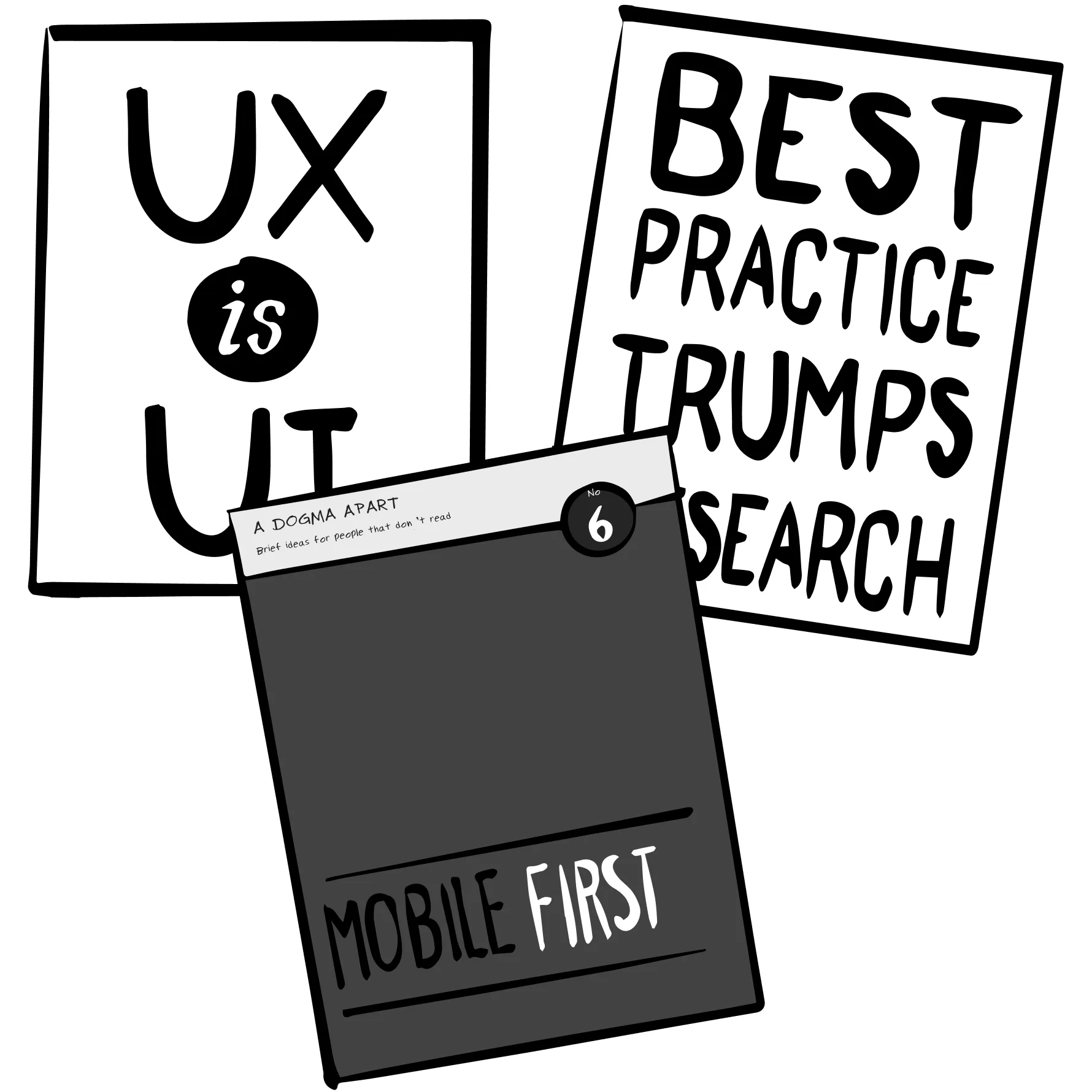
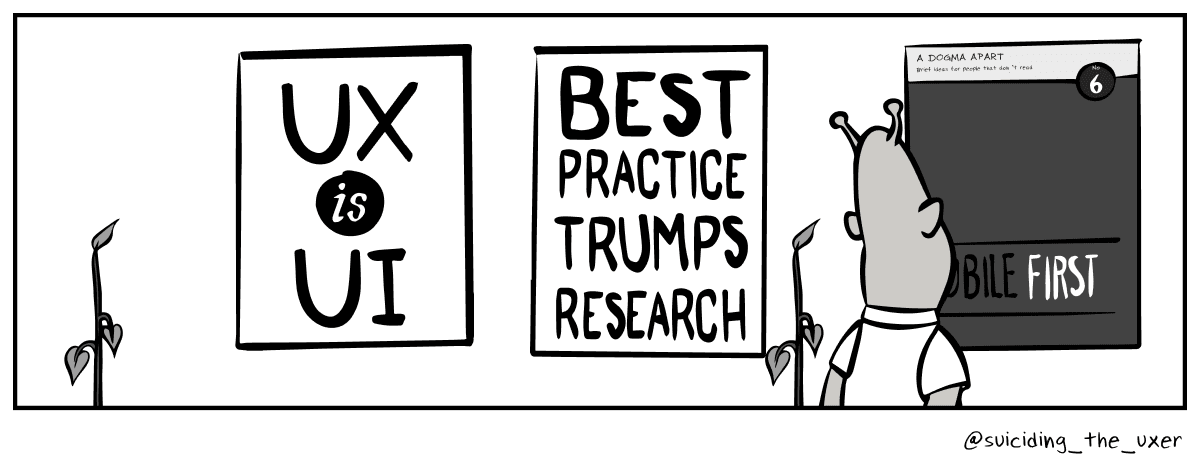
Ever wondered what happens when the sleek world of product design collides with the quirky ways of office life? Let's just say, it's not all about making things look pretty. Imagine you dive into some serious number-crunching and come up with a results that could flip our whole game plan on its head. But when you pitch this game-changing idea, it's met with a grin and a pat on the back from the big boss man, as if you've just shared a wild conspiracy theory about aliens baking cookies on Mars. So, armed with nothing but stats and a stubborn streak, I turned this office standoff into a comic strip that's can be as real as it gets. And trust me, it's the kind of spicy plot twist that could make us rethink everything we thought we knew about user research.

What I Learned Reading Connor & Irizarry's Discussing Design
In this reflective piece, I delve into the core lessons from Adam Connor and Aaron Irizarry's "Discussing Design," exploring the nuanced art of critique beyond mere aesthetics in product design. Through a personal lens, I navigate the book's insights, underscoring the pivotal role of structured feedback, collaboration, and the strategic alignment of design principles with organizational dynamics. My mission is to unearth the levers available to designers aiming to amplify their influence and drive the creation of exceptional products. This review not only serves as a testament to the transformative power of critique within design practices but also as a guide for designers seeking to leverage their expertise to shape not just products, but also the very culture of their organizations. Through a synthesis of key takeaways and personal reflections, I aim to highlight how designers can extend their impact, fostering a culture of innovation and strategic clarity.