Blog

All Blog Posts

28 posts on practice, craft, leadership & influence

2024

— 12 posts
Lessons Learned from Mentoring on ADPList
Leadership6 May 2024

Lessons Learned from Mentoring on ADPList

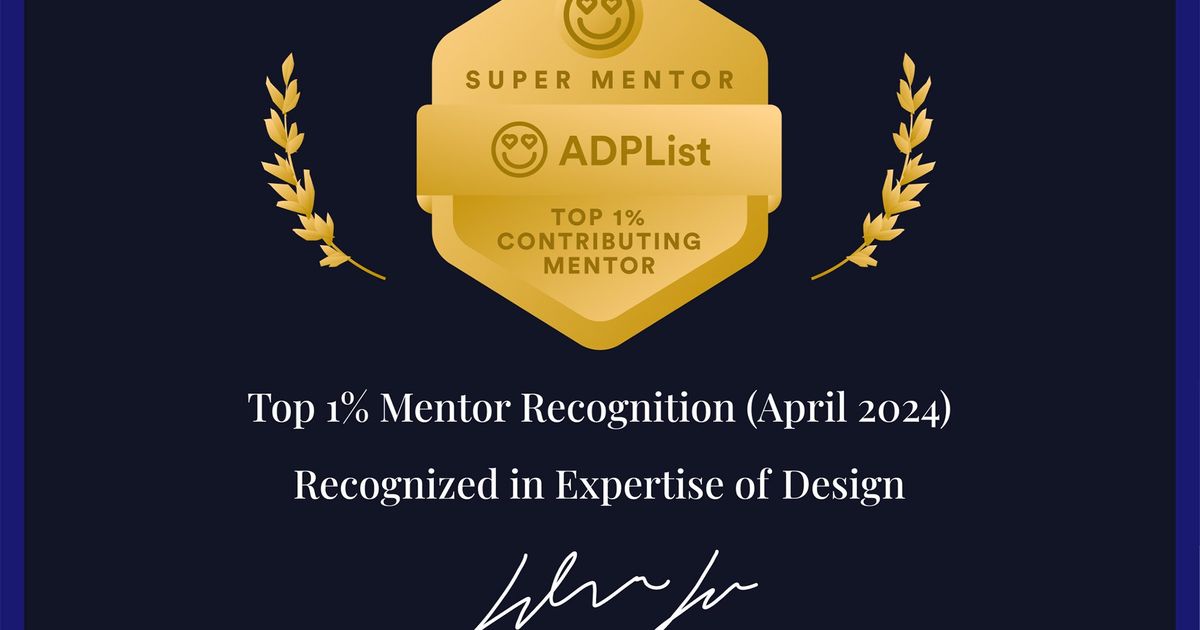
I recently reached a milestone as a mentor on ADPList, ranking in the top 1% globally. This recognition reflects countless rewarding interactions with mentees. Through these sessions, I've grown tremendously, both personally and professionally. My journey underscores the importance of effective communication and setting clear boundaries. I've learned that mentoring enriches both the mentor and the mentee, making it a deeply fulfilling experience.

Leveraging Authority for Design Success
Craft8 Apr 2024

Leveraging Authority for Design Success

Have you ever wondered how subtle cues shape our decisions? Or how a simple change in appearance can alter perceptions? This is the 5th post reflecting on Robert Cialdini's seminal work, "Influence." The book explains how our minds work when making choices. I have read and reflected on it so that you get tips on how to use these concepts in design and work settings. Here, I combine three ideas from Cialdini's book with my own experiences. I show how these ideas affect communication, how we see things, and influence in work environments.

Likability Matters: Keys to Success in the Workplace
Craft1 Apr 2024

Likability Matters: Keys to Success in the Workplace

In the professional world, how you dress and communicate can make or break your success. Research shows that even subtle cues like clothing choices can sway people's trust and cooperation. But it doesn't stop there. How you handle disagreements and deliver tough news also shapes how others perceive you and your impact.So, let's dive into the nitty-gritty of professional dynamics. We'll explore how your outfit can be your silent ally in winning trust. We'll also learn how to change conflicts into teamwork and share difficult messages smoothly.Get ready for some real talk about the power of perception in the workplace. Learning about smart dressing and handling hard talks will improve your work skills. So, buckle up and let's dive in!

10 Heuristics for Effective Business Communication
Leadership25 Mar 2024

10 Heuristics for Effective Business Communication

Have you thought about how the rules for creating easy-to-use interfaces could change our everyday conversations? Why is it important for designers to think about blending these areas? In a time when clear communication is key, knowing how design rules and good conversation mix can really improve our talks. This isn't just to make chatting easier. It's to make it more useful, interesting, and meaningful.In this article, I combine Ros Atkins' Art of Explanation methods with Jakob Nielsen's 10 heuristics. By doing this, I'm hoping to help designers improve their business conversations. Nielsen's rules changed how we see user-friendly interfaces, hoping to make tech easy for all. Atkins focuses on keeping communication simple, exact, and relevant. This matches Nielsen's ideas. They provide a base for new rules to help anyone improve their communication skills.

The Influence of Social Proof in Professional Settings
Craft18 Mar 2024

The Influence of Social Proof in Professional Settings

Ever wondered how the concept of "going with the flow" impacts your work or how your team comes up with ideas? Well, let's dive into the world of social proof and see how it's playing a bigger role than you might think, especially in design and innovation. Imagine you're in a room where everyone's nodding along to the same old ideas because, hey, if it ain't broke, don't fix it, right? Wrong. This mindset can really put a damper on creativity and new ideas. In my journey, I've learned that it's important to take initiative. Even if it seems unconventional. Whether it's introducing new features or promoting bold ideas, we need to challenge status quo. So, are you willing to understand social proof to your advantage? Are you willing to break free from BAU, and genuinely prioritise user-centred design? Let's get into how we can turn the tide, encourage fresh thinking, and maybe even lead the charge in redefining norms.

Things I Wish I Knew 20 Years Ago While Job Hunting in UX Design
Leadership11 Mar 2024

Things I Wish I Knew 20 Years Ago While Job Hunting in UX Design

This post is about three key learning moments that came after a tough job interview and changed my view of good communication. The candid feedback from a recruiter. A mentorship session on ADPList. And insights from Ros Atkins' "The Art of Explanation". These experiences revealed the critical importance of structured narrative in interviews. This epiphany has transformed my approach to interviews, emphasising the power of clear, structured responses to convey my design journey and impact. I share these learnings to empower fellow UX designers. I want to help them master their stories. They should be able to speak about their experiences and skills with clarity and conviction. This is true even in high-pressure situations.

What I Learned Reading Robert Cialdini's Influence (Part 2)
Craft4 Mar 2024

What I Learned Reading Robert Cialdini's Influence (Part 2)

Are you navigating the intricate world of product design or user experience, wrestling not just with the challenges of creating impactful designs but also with the complexities of influencing decision-making within your organization? Whether you're a seasoned leader with years under your belt or a junior designer eager to carve out your path and make a significant impact, the journey is fraught with hurdles that extend beyond the design itself.This post is tailored for those who find themselves at the crossroads of design and organizational dynamics, looking to wield influence effectively. If you've ever found yourself pondering how to advocate for user-centric design principles amidst a sea of differing opinions, or how to navigate the murky waters of corporate politics to push forward your design ideas, then you're in the right place. We delve into not just the 'what' but the 'how' of making your voice heard and your work recognized, turning principles into practice for the betterment of your projects and your professional growth.

What I Learned Reading Robert Cialdini's Influence (Part 1)
Craft26 Feb 2024

What I Learned Reading Robert Cialdini's Influence (Part 1)

As product designers, how often do we pause to think about the forces that shape our interactions, decisions, and, ultimately, our success? Have you ever considered the profound impact that your behaviours have on your work with stakeholders? Or have you pondered the role that personal rapport has in transforming challenges into collaboration? As product designers, we do our best with stakeholder relationships. We seek ways to increase our impact, build meaningful collaborations, and push the user-centric agenda. To do so, it's crucial to dig deeper into the psychological levers of our interactions. We need to understand the timeless principles that govern human behavior. In this blog post I explore insights gathered from Robert Cialdini's book, "Influence," as seen through the lens of product design, UX and organisational dynamics. Here, I discuss how these principles apply to product design and also enrich our understanding of the human connections at the heart of successful design projects.

Overcoming Design Dogmas With Data
Leadership19 Feb 2024

Overcoming Design Dogmas With Data

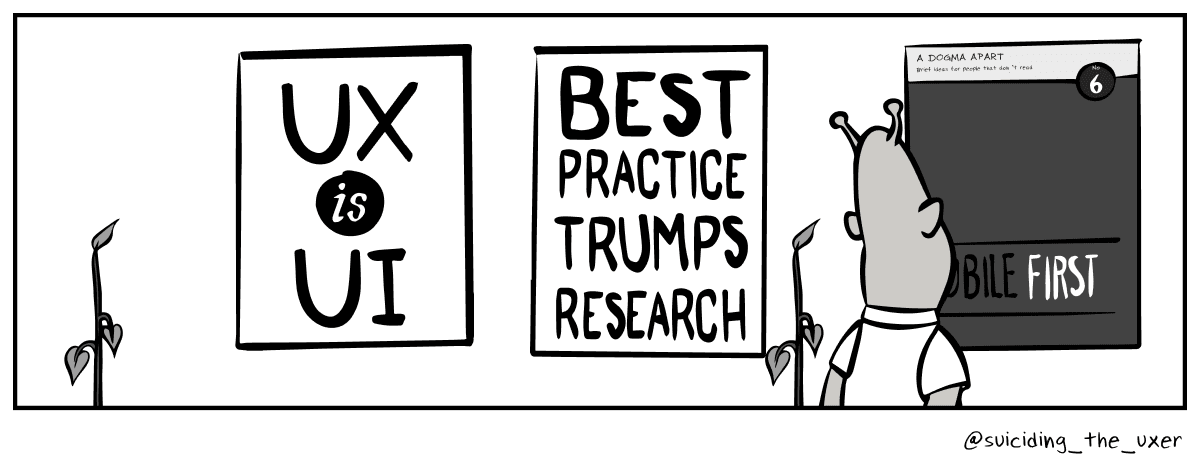
Ever wondered what happens when the sleek world of product design collides with the quirky ways of office life? Let's just say, it's not all about making things look pretty. Imagine you dive into some serious number-crunching and come up with a results that could flip our whole game plan on its head. But when you pitch this game-changing idea, it's met with a grin and a pat on the back from the big boss man, as if you've just shared a wild conspiracy theory about aliens baking cookies on Mars. So, armed with nothing but stats and a stubborn streak, I turned this office standoff into a comic strip that's can be as real as it gets. And trust me, it's the kind of spicy plot twist that could make us rethink everything we thought we knew about user research.

What I Learned Reading Connor & Irizarry's Discussing Design
Craft12 Feb 2024

What I Learned Reading Connor & Irizarry's Discussing Design

In this reflective piece, I delve into the core lessons from Adam Connor and Aaron Irizarry's "Discussing Design," exploring the nuanced art of critique beyond mere aesthetics in product design. Through a personal lens, I navigate the book's insights, underscoring the pivotal role of structured feedback, collaboration, and the strategic alignment of design principles with organizational dynamics. My mission is to unearth the levers available to designers aiming to amplify their influence and drive the creation of exceptional products. This review not only serves as a testament to the transformative power of critique within design practices but also as a guide for designers seeking to leverage their expertise to shape not just products, but also the very culture of their organizations. Through a synthesis of key takeaways and personal reflections, I aim to highlight how designers can extend their impact, fostering a culture of innovation and strategic clarity.

From Design Leader to Design Monkey
Leadership5 Feb 2024

From Design Leader to Design Monkey

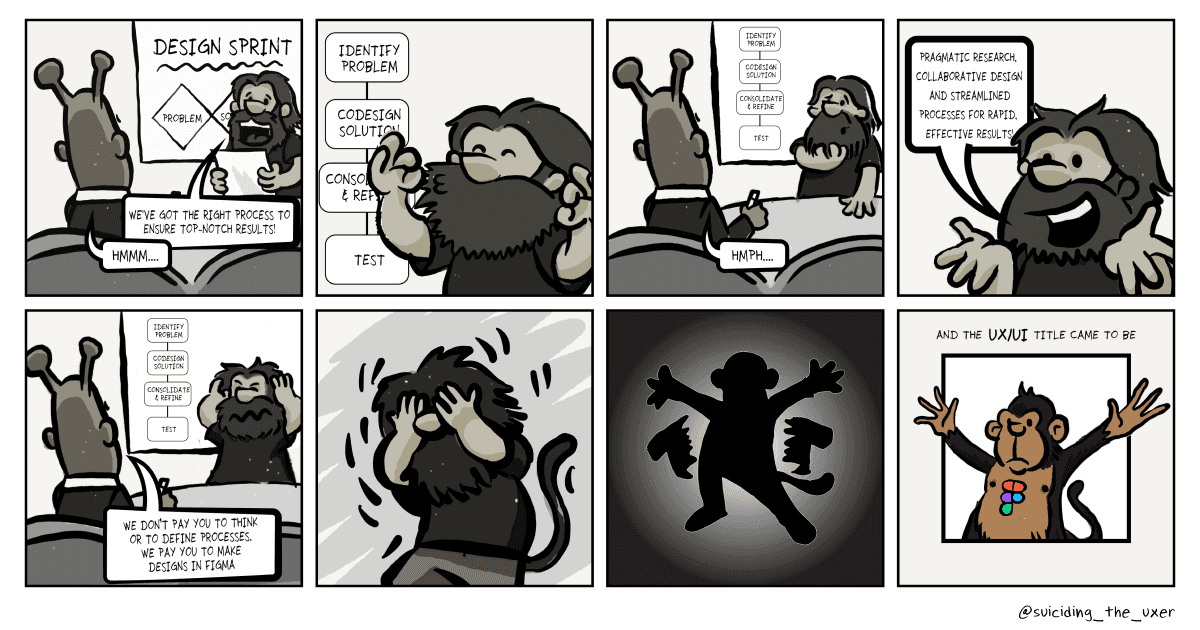
In the whimsical wilderness of the UX realm, I, your seasoned guide, reveal the transformation from UX visionary to a "Design Monkey" in a land ruled by pragmatic overlords and aesthetic alchemists. This satirical safari peeks behind the curtain where design sprints morph into pixel-pushing marathons, and strategic innovation takes a backseat to the whims of those who'd rather we just "make it pretty." As we navigate the tangled vines of UX/UI, remember: any resemblance to real-world scenarios is purely coincidental, or is it? Join the crusade to reclaim the true essence of UX, beyond the allure of surface-level splendor. Dive into this incendiary narrative where we don't just survive the jungle; we redesign it. Keep up with the adventure on my Instagram, @suiciding_the_uxer, where the quest for authentic UX continues with a wink and a nod to the familiar chaos we secretly love to untangle.

What I Learned Reading Tom Greever's Articulating Design Decisions
Craft27 Jan 2024

What I Learned Reading Tom Greever's Articulating Design Decisions

In my recent exploration to understand the drivers of influence in the world of design and how wielding that influence enhances products, I delved into Tom Greever's book, 'Articulating Design Decisions.' Even with over 15 years of experience in UX design and multiple senior roles under my belt, I was astounded by the new insights I gained. Tools learned from this book are not about appreciating the aesthetics of design but about recognising the profound impact of influence in reshaping an organisation's very DNA. Greever's IDEAL framework is a powerful tool that transforms designers' communication to develop influence. I recount how it has helped me identify problems with newfound clarity, and how it has not only made me more helpful to my stakeholders but also deepened my empathy with users, and appealing to business needs in their language. This post extends beyond the theory learned in the book; it's also about how I've used it, and made an impact. Join me as we step into the future of UX influence, where designers develop a knack for business influence - the UX Jedis with mind control abilities.

2015

— 6 posts
Design and Future-proof Perfection Through Errors
21 June 2015

Design and Future-proof Perfection Through Errors

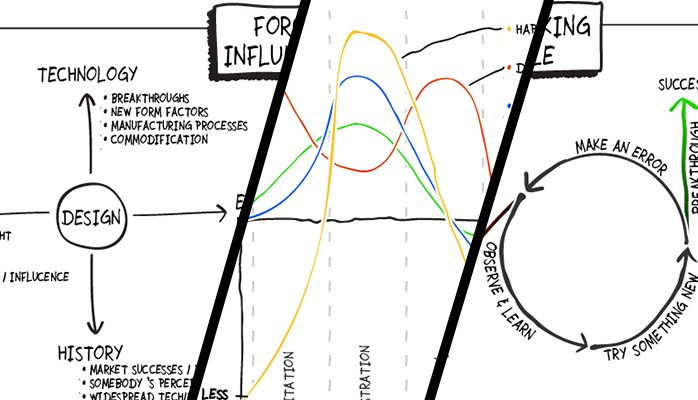
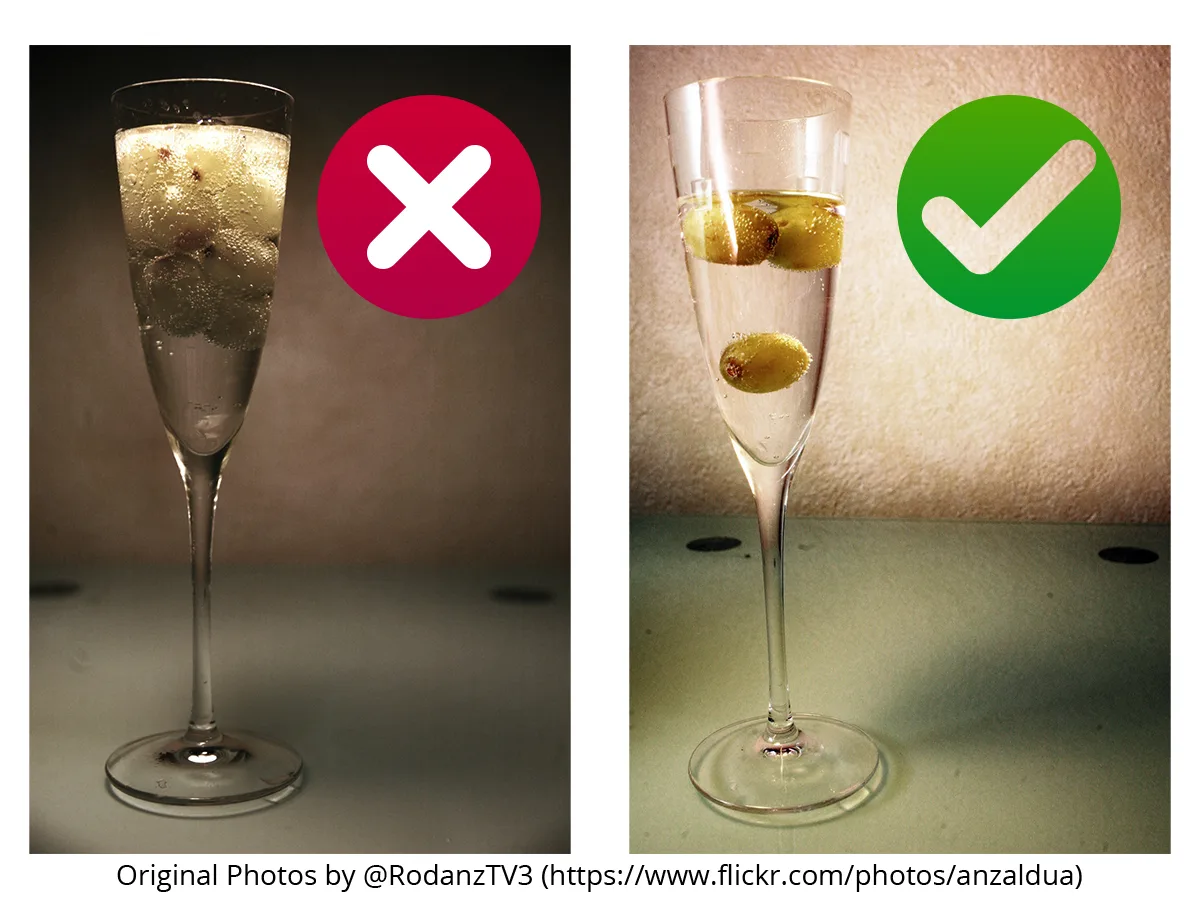
In this article, I delve into a novel design-workflow approach that seamlessly integrates into the user-centered design process, aimed at bridging the gap between creative and technical teams while striving for a future-proof technical architecture and solution design. I advocate for the recognition that true future-proofing arises from a team’s capacity to adapt to constant changes, resembling the resilience of natural organisms. In a world where buzzwords often dominate and detract from meaningful execution, I underscore the significance of steering away from hollow repetitions to purposeful and adaptable actions. I also explore the concept of 'perfection' in a workplace, contending that it is unattainable when seen as a final product but achievable when viewed as a process of effective communication and team orchestration within constraints of time and budget. The pursuit of perfection, therefore, becomes a pursuit of the best possible solution that honours its purpose. Lastly, I discuss the need to embrace errors as an integral part of the design process, arguing that the path to mastery involves a framework that acknowledges and learns from mistakes rather than punishing them. The resulting gain in domain knowledge and technical architecture, I believe, is unparalleled. By rethinking these often-misinterpreted concepts - future-proofing, perfection, and error-embracing - I hope to illuminate a fresh approach to design and business.

Mobile Phone Gestures
17 May 2015

Mobile Phone Gestures

In my quest to revolutionize UX design techniques, I delved into illustrating mobile phone gesture interactions, resulting in a collection of hand-drawn pictures. My aim was to explain these interactions through a universally understood medium - the human hand. I utilized software like Balsamiq 3, but these illustrations can be used across various prototyping software like Illustrator, Photoshop, Omnigraffle, etc. If you find this approach beneficial, I'm willing to expand the set with diverse hand sizes, additional devices, and more. I'm eager to hear your thoughts on this endeavor - happy wireframing!

Updated Excel Calendar Tool for Balsamiq
18 Apr 2015

Updated Excel Calendar Tool for Balsamiq

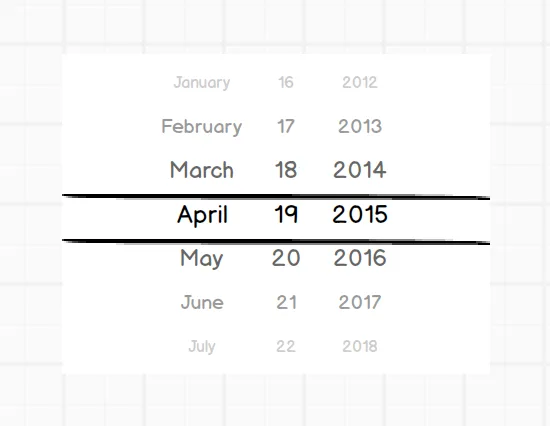
In this blog post, I am excited to share the recent updates I've made to the Excel Calendar Tool for Balsamiq. This modification now includes formulas that greatly simplify the process of copying and pasting dates into the iOS Picker. This feature can be a game changer if you frequently alter dates in your wireframes. Using the tool is as easy as selecting the date you want. Grab the updated tool and explore its new functionality by downloading it from the provided link.

Stop-and-Think Design
19 Feb 2015

Stop-and-Think Design

In this article, I explore the evolution of design and its effects on user interfaces, from the Industrial Revolution to the digital era. We've seen remarkable creative bursts associated with new technologies, such as personal computers, the Internet, and mobile devices. However, design has often been constrained by a reluctance to challenge the status quo, sticking with familiar interfaces even when they no longer serve our needs effectively. But with the rise of mobile technology, there's a growing opportunity to rethink these legacy controls. Small, single-purpose apps have narrowed the software feature scope, allowing designers to be bold and challenge existing norms. But don't just take my word for it - read on for valuable insights from key figures like Henry Heinz and Howard Schultz who shaped their business designs to meet their specific environmental constraints. Let's rethink design, challenge the outdated norms, and align ourselves more with the user in this increasingly digital world.

Challenging Canonical Design
12 Feb 2015

Challenging Canonical Design

In this article, I reenvisioned weight tracking data visualizations to provide a broader picture of an individual's weight loss journey. Disappointed with the linear displays from fitness trackers, I developed weekly series charts and incorporated BMI and weight-loss ratios. However, due to their complexity, I turned to a more intuitive scale's gauge metaphor. This exploration highlighted different user needs in weight tracking, leading to an idea for an app. Although the project was eventually shelved, the insights gained into data visualization were invaluable.

User Experience Design of Everyday Things
27 Jan 2015

User Experience Design of Everyday Things

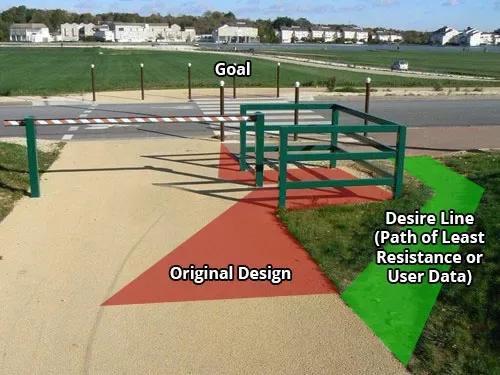
In this article, I explore the true essence of User Experience (UX) design, challenging the common misconception that it's merely about making the easiest path for users. The catalyst for this exploration is an image of a poorly designed pedestrian gate, leading me to delve into the concept of "desire lines"—paths created by users to reach their desired outcomes more efficiently. I emphasize that UX design is an iterative process involving user research, and how it shapes design modifications to meet user needs. Furthermore, I share a dialogue with my colleague, highlighting that UX design must also consider business goals, such as ensuring pedestrian safety. The article is a reminder of the ever-evolving understanding and growth of UX, and a tribute to those who incite such insightful discussions.

2014

— 6 posts
How to Write New Year's Resolutions (from the UX Perspective)
16 Dec 2014

How to Write New Year's Resolutions (from the UX Perspective)

In this article, I discuss how my experience as a UX Designer in the software development industry has revolutionized the way I approach New Year's Resolutions. With the end of the year fast approaching, I offer insight on how UX design principles can help clarify, measure, and accomplish these annual goals. Drawing from UX tools such as defining User Pain Points, setting quantifiable Goals, and organizing work into Potential Shippable Increments, I propose a new method for writing resolutions that increase the likelihood of success. Using the examples of losing weight and saving money, I demonstrate how to turn vague objectives into actionable steps with clear outcomes. Ultimately, this UX-focused approach aids in keeping track of progress, prioritizing what truly matters, and achieving meaningful change in the New Year. From this perspective, we not only shape our careers, but our careers also shape us. Let's set fewer but more achievable goals for a successful new year. Happy 2015! Salud!

Organizational change through the eyes of Art, UX and Technology
4 Dec 2014

Organizational change through the eyes of Art, UX and Technology

In this article, I explore the parallels between art, user experience (UX), and technology as I share insights into my journey of navigating organizational change in a software company. Drawing on my experiences, I liken the role of a software designer to that of change agents like artists Vincent Van Gogh and Pablo Picasso. Just as their art relied on audience appreciation for its success, software designers must also effectively communicate their ideas to have an impact. I elaborate on the challenges of altering people's perceptions, referencing Chris Nodder's views in his book "Evil by Design." I further provide a 6-point strategy for facilitating organizational change, including gaining input, starting small, avoiding comparisons, getting your ideas discussed, obtaining high-level sponsorship, and not nagging about your 'art'. I conclude by posing a thought-provoking question about whether one seeks recognition in their current job or posthumously, reflecting on the differing fames of Van Gogh and Picasso. The key references for this article are two enlightening books: "Predictably Irrational" by Dan Ariely and "Evil by Design" by Chris Nodder.

Designing Photography
10 Sept 2014

Designing Photography

In this article, I recount my personal journey of how I came to be featured in a commemorative publication by Yahoo! Mexico in 2008, with the emphasis on using design as a tool. My entry to a photography contest organized by Flickr, called 'Show Your Mexico with Flickr', led to an unexpected outcome. Rather than selecting pictures from my existing collection, I went through a process of designing a photo, eventually settling on capturing a Mexican taco stall. This image, enhanced with HDR techniques I was learning at the time, won me a place in the commemorative book and an exhibition in Mexico City. Looking back, I realized how integral the design aspect was in fulfilling the mental models of the contest jury. This journey reinforced my belief in the power of design, not just in photography, but also in broader life contexts. Examples of my work in User Experience design and the creation of this blog's header further demonstrate the transformative power of thoughtful design.

The Abstract Wor(l)d of Design
9 Sept 2014

The Abstract Wor(l)d of Design

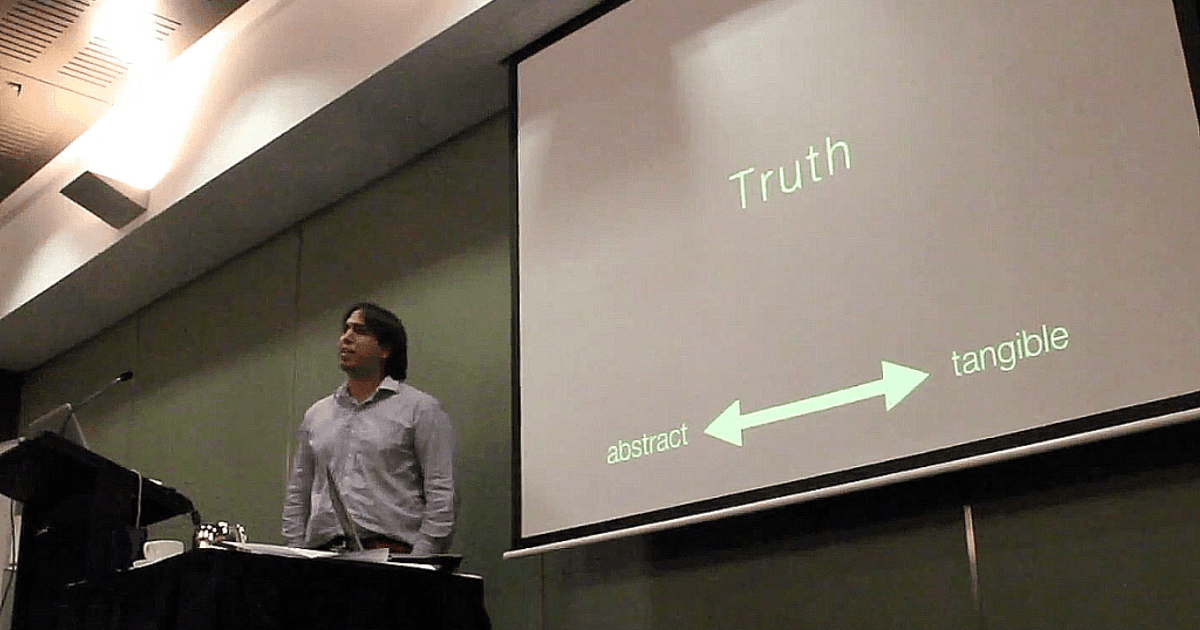
In this article, I explore the abstract nature of concepts like "truth" and "design", and how the diversity of interpretations reflects our individual perspectives and assumptions. In a training course, I illustrated the contrast between abstract and tangible concepts. For instance, "truth" is an abstract term that, despite its seeming simplicity, yields a variety of interpretations from different individuals. Similarly, "design", a concept integral to my daily routine as a UX designer, exhibits a similar pattern. Although design is often stereotypically associated with specific imagery, its essence lies in its intent and purpose, varying across individuals. I argue that this interpretive fluidity makes concepts like "design" and "truth" inherently abstract.

8 Sept 2014

Deberías Saber (You Should Know)

In this article, I reminisce about my experience writing my first hit song at the age of 21. This song was an unexpected milestone in my life—it found its way into the music libraries of my friends, onto the radio, and even led to a moment of street recognition. Encouraged by this experience, I continued writing music. The song narrates the bittersweet tale of a young man who fell in love with the wrong woman, providing a more ironic than accurate portrayal of reality. Now, it's available in Spanish, English, and German, and I've even broken it down by individual tracks for you to remix or play along with. While the lyrics may not be deeply intellectual, they come from a place of genuine emotion. I encourage you to make the song your own, and share your results in the comments. Remember, music is all about having fun! For commercial uses, please contact me. Enjoy the musical journey!

10 June 2014

Balsamiq Excel 2 Calendar Table Generator

In my daily office work, I frequently interact with Balsamiq, a tool known for its quick interface sketching. However, its calendar component, fixed at February 2008, falls short when dealing with time-based views during client walkthroughs. Previously, my attempts to create dynamic calendars using Labels and Panels led to complicated nested groups, until I discovered the versatile Table component. Despite its advantages, typing Balsamiq's markup consistently across different wireframes was a challenge. To tackle this issue, I created the Balsamiq Excel 2 Calendar Table Generator. It lets you choose the desired month(s), and automatically generates the necessary markup. Its flexibility even extends to allowing the selection of the current date and providing links to other wireframes by merely typing the file names. I trust you'll find this tool as useful as I do in your wireframing efforts.

2012

— 2 posts
18 Apr 2012

Create and Track your QR Codes

In this article, I share a step-by-step guide to create traceable QR codes that can be used to drive traffic from printed sources to your chosen online destination, such as a webpage. QR codes, an evolved type of barcode, can contain URLs, phone numbers, text information, and SMS data, which smartphones can read and interpret to perform specific tasks. I'll guide you through the process of finding a relevant landing page, using Google Analytics' URL Builder for tracking, creating a shortened URL using Google's service, and then turning this URL into a QR code using Kaywa's service. With this method, you can use both Google Analytics and Google's URL shortening service to track link statistics, providing valuable insights into your campaign's effectiveness.

9 Apr 2012

My URL is Shorter (and Prettier) Than Yours

In my 2012 article "My URL is Shorter (and Prettier) Than Yours," I explored the landscape of URL shorteners, tools that came to prominence through social platforms with character limitations like Twitter. I highlighted the value these shorteners added in terms of easy content sharing, but also acknowledged their flaws such as their increasing length and hidden target URLs. With a desire to stand out and increase trustworthiness, I developed my own URL shortener using my initials and my country's ccTLD, resulting in a concise, secure, and personal link. I made this change using applications that required no coding skills, opening up possibilities for anyone to create their own shorteners. With the rising adoption of URL shortening services by individuals and companies, I anticipate a growing market for personalized online identity management solutions.